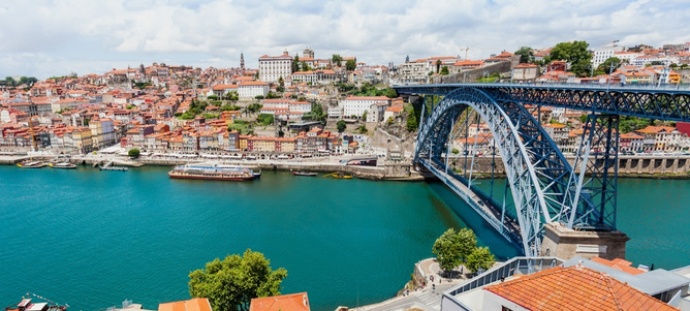

If you're searching for the most famous bridge in Porto, there is one clear answer: the Luís I Bridge.
Spanning the Douro River and connecting the historic center of Porto with Vila Nova de Gaia, this iconic structure is one of the most recognizable landmarks in Portugal, and a highlight of any visit to the city.
Why Luís I Bridge is the most famous bridge in Porto
Built in 1886, the Luís I Bridge is more than just infrastructure, it’s a defining symbol of Porto’s identity.
Designed by a student of Gustave Eiffel, the bridge features a bold iron arch that dominates the skyline and reflects the engineering innovation of the 19th century.
Key facts at a glance:
- Type: double-deck metal arch bridge;
- Length: approximately 385 meters;
- Height: around 45 meters above the river
- Construction: 1881–1886
At the time of its completion, it was one of the largest iron arch bridges in the world.
Luís I Bridge vs Dom Luís I Bridge: what’s the correct name?
The official name is the Luís I Bridge, without the “Dom”.
But there’s a popular story behind this that many locals still like to tell.
The bridge was named after King Luís I of Portugal, who reigned during its construction. However, according to local tradition, the king never attended the inauguration ceremony in 1886.
Because of this perceived snub, the people of Porto are said to have dropped the royal honorific “Dom” from the bridge’s name as a subtle form of protest.
Is the story true?
There is no definitive historical proof that this was an official or intentional decision. However:
- The bridge’s registered name has always been “Luís I Bridge”;
- The story persists as part of Porto’s strong local identity and character;
- It reflects the city’s long-standing reputation for independence and civic pride.
Why both names still exist today
- “Luís I Bridge” - historically accurate and official;
- “Dom Luís I Bridge” - widely used, especially in tourism and international contexts.
What makes Luís I Bridge so special?
Two levels, Two unique experiences
One of the most distinctive features of the bridge is its two deck design:
- Upper deck:
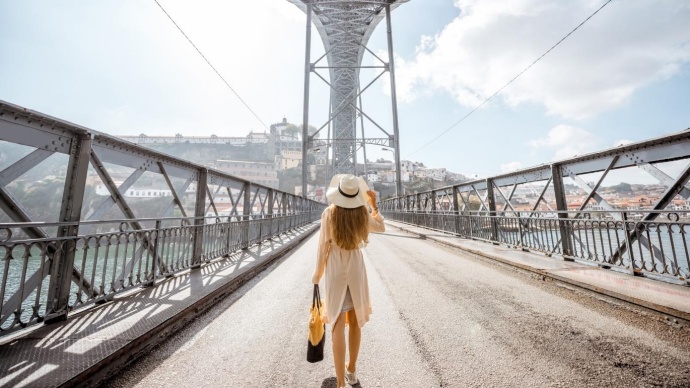
- Used by pedestrians and the metro, offering breathtaking panoramic views of the Douro River and Porto’s skyline.
- Lower deck:
- Connects Ribeira to Gaia at river level, where the city feels more vibrant and immersive.
The best views in Porto
From the upper level, you’ll enjoy one of the most iconic views in Portugal:
- The colorful houses of Ribeira;
- Traditional rabelo boats on the Douro;
- The rolling hills leading toward the Atlantic.
It’s one of the top photography spots in the city, especially at sunset.
A gateway to Port Wine culture
Crossing the bridge takes you directly into Vila Nova de Gaia, home to the world famous Port wine cellars.
This makes the bridge not just a landmark, but a cultural gateway between Porto’s historic center and its wine heritage.
Best ways to experience Luís I Bridge
Walk across at sunset
Golden hour is when the bridge truly comes alive, with warm light illuminating the river and city.
Take the metro over the upper deck
A simple yet unforgettable experience, gliding above the Douro with panoramic views.
Admire It from the river
Seeing the bridge from below reveals its full scale and architectural elegance.
Discover Luís I Bridge with Authentic Trails
To elevate your visit beyond sightseeing, consider experiencing Porto through a curated journey.
At Authentic Trails, you’ll find carefully designed experiences that naturally include the Luís I Bridge and its surroundings:
- Explore Porto’s historic center with expert local guides;
- Discover hidden viewpoints overlooking the Douro;
- Experience the river from a unique perspective.
👉 Explore Porto tours
👉 Discover the Douro Valley
👉 Private experiences in Portugal
These experiences are ideal for travelers looking to connect the city’s landmarks with deeper cultural insights.
Practical tips for visiting
- Best time to visit: sunset or early morning for fewer crowds;
- Photography tip: head to the upper deck for wide panoramic shots;
- Walking tip: combine the bridge crossing with a Ribeira-Gaia walk;
- Safety: the bridge is pedestrian friendly, but can get busy.