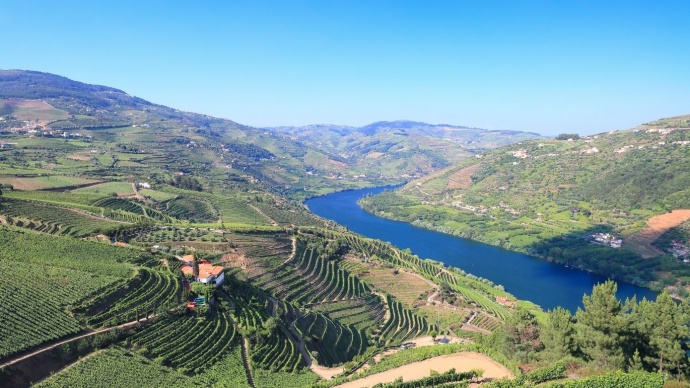

How many days in Douro Valley do you actually need? If you are visiting for the first time, two to three days is a good minimum. It gives you enough time to enjoy the vineyards, visit a wine estate, explore towns such as Pinhão and Peso da Régua and spend some time simply appreciating the landscape.
But the Douro is also a region that rewards slower travel. Stay four or five days and you can add walks, smaller villages and more relaxed wine experiences. Stay for a week or longer and you can turn your visit into a real journey through the valley on foot or by bike.
The Alto Douro Wine Region has been shaped by wine production for around 2,000 years and has been a UNESCO World Heritage Site since 2001. Its terraced vineyards, quintas, villages and river landscape are not concentrated around one single attraction, which is why spending more than a day here makes such a difference.
How many days do you need in the Douro Valley?
As a quick guide:
| Time | Best for |
|---|---|
| 1 day | A first glimpse, one winery and Pinhão or Régua |
| 2 days | Wine, river landscapes and one or two towns |
| 3 days | The best option for most first-time visitors |
| 4-5 days | Slow travel, walking and smaller villages |
| 7-9 days | Multi-day hiking or cycling through the region |
If you are travelling from Porto, try not to think of the Douro simply as a day trip. Wine estates, villages, viewpoints and walking trails are spread throughout the region, and travelling slowly gives you a much better sense of the landscape.
Is one day enough in the Douro Valley?
One day is enough to see the Douro Valley, but not really enough to experience it.
With limited time, concentrate on the central wine region around Peso da Régua and Pinhão. You could combine a scenic journey through the valley with a winery visit, lunch and a short boat trip.
What you will probably not have time for is exploring quieter villages, walking through the vineyards or simply spending an afternoon at a quinta without constantly checking the clock.
A day trip makes sense if your Portugal itinerary is very tight. Otherwise, staying at least one night changes the experience considerably.
Is two days enough?
Two days work well for travellers who want the classic Douro highlights without dedicating a large part of their holiday to the region. A simple itinerary could look something like this:
Day 1: travel into the valley, explore Peso da Régua and visit a wine estate.
Day 2: continue to Pinhão, enjoy the river landscape, visit another quinta or take a short walk through the surrounding vineyards.
Pinhão is particularly well placed for a short visit because it sits right in the wine growing landscape and is surrounded by some of the valley’s characteristic terraced slopes.
With two days, however, it is better to resist the temptation to fit too many wineries into the itinerary. The Douro is much more enjoyable when there is time between stops.
Are three days enough in the Douro Valley?
For most first time visitors, three days is probably the sweet spot.
You have enough time to experience wine, food and scenery without rushing, while also discovering something beyond the most famous viewpoints.
Day 1: Peso da Régua and the river
Arrive in the valley and spend some time around Régua, one of the principal centres of the Douro wine region. Use the first day to understand the landscape rather than trying to cover large distances.
Day 2: Pinhão and the vineyards
Spend a full day around Pinhão.
Visit a quinta, walk among the vineyards and leave time for a boat ride or a long lunch overlooking the river. Pinhão is also known for its railway station, whose tile panels depict scenes connected with traditional wine production.
Day 3: go beyond the riverside
Use your final day to explore one of the villages above the valley, such as Provesende, or take a longer walk through the vineyard landscape.
This third day is often what turns a sightseeing trip into a more authentic experience of rural Douro.
What can you do with four days?
Four days give you enough time to combine the Douro with Porto without squeezing both destinations into separate rushed visits.
Authentic Trails’ Porto & Douro shortbreak tour – wine & walking experience lasts four days and three nights.
It combines Porto with the scenic train journey to Pinhão, vineyard walks, Provesende, wine experiences and a traditional rabelo boat trip.
This amount of time is particularly useful if Porto is your arrival point and you want to understand the connection between the city, Port wine and the landscapes where the grapes are actually grown.
What about five days in the Douro Valley?
With five days, you can slow down. Rather than travelling every day, you can spend longer in individual places and include activities such as:
-
Hiking between wine villages;
-
Visiting smaller wine estates;
-
Trying local olive oil and regional food;
-
Taking a river trip;
-
Exploring Lamego;
-
Spending more time around Provesende or Sabrosa;
-
Walking through vineyards rather than seeing them only from viewpoints.
The UNESCO listed landscape covers far more than the riverbanks around Pinhão and Régua. The classified Alto Douro Wine Region alone covers 24,600 hectares, while the wider Douro Demarcated Region extends considerably beyond it.
That scale is one of the strongest arguments for staying longer.
How many days for hiking in the Douro Valley?
If hiking is the main reason for your visit, a week or more is much more rewarding than two or three days.
Walking allows you to leave the riverside roads and travel through vineyards, historic paths, villages, orchards and wine estates.
Authentic Trails’ Douro Wine Region self-guided hike tour lasts nine days and eight nights, with six walking stages.
The itinerary connects places including Sabrosa, Provesende, Pinhão, Ucanha, Lamego and Régua, allowing you to experience how the landscape changes as you move through the wine region.
There is also a Douro Wine Region self-guided Essential hike tour for travellers looking for an alternative version of the itinerary.
Another option is the Porto and the Douro Valley Rail and Hike Tour, which combines one of Portugal’s most scenic railway journeys with several hiking stages through the region.
How many days for cycling in the Douro Valley?
Allow around a week if you want to discover the region properly by bicycle.
The advantage of cycling is that you can see the landscape change dramatically as you travel: from the remote cliffs and natural landscapes near the Spanish border to almond groves, forests and finally the famous terraced vineyards around Pinhão and Régua.
The Douro Valley self-guided bike tour takes eight days and seven nights, with five cycling stages.
It begins in Miranda do Douro and travels through the Douro International area before reaching the heart of the wine region.
This kind of itinerary shows why defining the Douro only as Pinhão and Régua misses much of what the region has to offer.
Should you combine Porto and the Douro Valley?
Yes, especially if this is your first trip to northern Portugal.
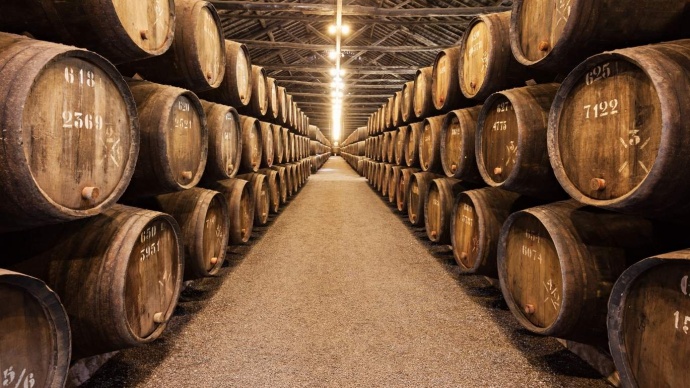
Porto and the Douro tell two parts of the same wine story. Grapes are grown and wine is produced among the steep vineyard terraces upstream, while Port was historically transported downriver and aged in the cellars of Vila Nova de Gaia.
If you have four or five days in total, combining Porto with a shorter Douro experience works well.
If you have a week or more, spend only the beginning or end of the trip in Porto and dedicate the majority of your time to travelling through the valley itself.
For more information about getting there and the different ways of exploring the region, read our guide on how to visit Douro Valley.
So, how long should you stay?
Choose 1 day if it is the only option.
Choose 2–3 days for the classic highlights.
Choose 4–5 days for a slower, more varied stay.
Choose 7–9 days if you want to travel through the region on foot or by bicycle.
The Douro may be possible to visit in a day, but it is the kind of landscape that makes much more sense when you give it time.