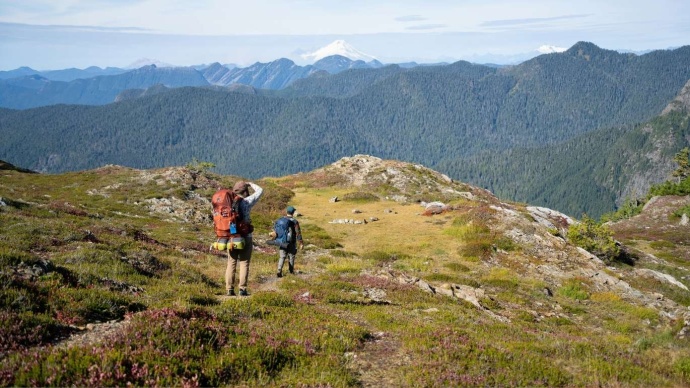
In Castro Laboreiro, Portugal, a walk from the river valley up to the plateau once took some families from their winter home to their summer one. The paths they used still cross the mountains, linking clusters of granite houses by stone bridges. They’re a good reason to bring walking shoes to this corner of Peneda-Gerês National Park.
You can see the ruined castle and the old watermills in half a day. Stay overnight and you can follow one of those paths far enough to understand why people moved with the seasons. Here’s how to choose a walk and make time for the village itself.
Where is Castro Laboreiro and how do you get there?
Castro Laboreiro lies in the municipality of Melgaço, in Portugal’s far north, close to the border with Galicia, Spain. It sits in the Serra da Peneda, in the northern part of Peneda-Gerês National Park. When planning your journey, use the village name as your destination. The town of Gerês is in a different part of the park.
From Porto, the drive is roughly 140 km (87 miles). Allow at least two hours, plus time for the winding mountain roads. If you approach from Melgaço via Lamas de Mouro, stop at the park visitor center there to pick up a trail map and ask about conditions. If you’re visiting without a car, arrange the last leg in advance. You can take the train from Porto to Valença and continue by pre-booked taxi. Once in Castro Laboreiro, several trails start within walking distance of the parish church.
What should you see in Castro Laboreiro?
Start at the parish church, where a stone pillory stands just outside. Across the village, the former town hall and courthouse recall a time when Castro Laboreiro governed its own territory. From here, you can spend the morning between two viewpoints. One looks across the border country from the castle, the other looks down into the river gorge.
Climb to the ruins of Castro Laboreiro Castle
The medieval fortress stands on a granite outcrop at 1,033 meters (3,389 feet). From the Miradouro do Castelo parking area, allow around 20 minutes each way on the uneven path, plus time at the top. Shoes with a good grip make the rocky sections easier, especially after rain.
Look for the Porta do Sol, the eastern gateway, and the remains of the cistern inside the walls. From below, it can be hard to tell where the rock ends and the fortifications begin. At the top, the wide view over the approaches to the village explains why a border fortress stood here.
See the waterfall and the old grain mills
The Ponte Velha, also called Ponte dos Mouros, crosses the Laboreiro River close to the village center. A short walk starting by the museum leads to a viewpoint over the waterfall downstream of the bridge. Look along the banks for the small watermills. Local families once brought rye here to be ground into flour for pão castrejo, the local bread.
If you’ve seen photographs of a humpbacked bridge with two arches, that’s a different crossing. The Ponte da Cava da Velha is farther down the valley near Assureira. You can visit it on the longer Castrejo trail below.
Why did families in Castro Laboreiro have two homes?
For generations, families moved with their livestock between brandas, settlements on the high plateau used in the warmer months, and inverneiras, winter hamlets in the sheltered valley. Castro Laboreiro itself was a year-round settlement. The Castro Laboreiro museum is a good place to get your bearings before walking between them. In the house beside the museum, the rooms are furnished as a local home would have been in the second half of the 20th century.
Few families still make the seasonal move, but livestock continue to graze here. The Cão de Castro Laboreiro, a Portuguese breed named after the village, traditionally guarded the herds. If you see a dog working, give it and the animals room as you pass.
Which hiking trail should you choose?
These three marked circuits start and finish in the village. The distance alone can be misleading here, particularly on the river trail.
- PR4, Trilho Interpretativo de Castro Laboreiro (5.2 km / 3.2 miles, around 2 hours). The easiest of the three climbs through oak woodland toward the branda of Portela. From the high point, look back across the valley to pick out the castle. There are still about 223 meters of climbing on this short loop.
- PR6, Trilho do Rio Laboreiro (8.1 km / 5 miles, around 4 hours). Choose this for the waterfall, old mills and the bridge at Varziela. The municipality rates the full circuit very difficult, with about 486 meters of ascent. If you only want to see the falls, take the short viewpoint walk from the museum.
- PR3, Trilho Castrejo (16.7 km / 10.4 miles, a full day). This demanding circuit links seasonal hamlets, oak woods and the Cava da Velha bridge. With around 839 meters of climbing, it suits walkers who want a day on the old routes between the plateau and the valley.
For a longer holiday, our Peneda-Gerês National Park self-guided hike tour begins with a night in Castro Laboreiro. The first walking day offers an 11 km or 16 km route around the village, before the itinerary continues toward Peneda and Soajo. It’s a way to trace the mountain paths beyond the area you can cover from a single base.
When should you visit, and how long do you need?
Spring and early autumn are good choices if walking is the main reason for your trip. In summer, start longer routes early, especially on the open plateau. In winter, check the local forecast before setting out for the castle. On a misty day, the museum and a lunch of roast kid with local rye bread make a good alternative until the views clear. Our guide to hiking in Portugal in October includes more ideas for an autumn trip.
With half a day, pair the castle with the Ponte Velha and the waterfall viewpoint. With one full day, walk the PR4 in the morning, stop for lunch in the village, then visit the museum and castle in the afternoon. With two days, keep the sightseeing for arrival day and give the Castrejo circuit a full day of its own.
From the mountains to the Minho by bike
If you’d like to see how quickly this landscape changes, spend the night in Castro Laboreiro and leave on two wheels. Our Minho to Porto self-guided bike tour starts here. The first riding stage heads for Monção, with a choice of 46 or 54 km (29 or 34 miles). The granite uplands give way to the Alvarinho vineyards of the Minho valley, and later stages take you to the Atlantic coast.
Arrive early enough for the castle walk before your first ride. From the ruined walls you can see how high the journey starts. The next evening, a glass of local Alvarinho in Monção makes a fitting end to the descent.